The Spectacular Nests of the Sociable Weaver


Not all bird species build nests. Some, like the razorbill, lay an egg on a rocky ledge and hope for the best. Others, like the king penguin, have no access to nesting materials so keep their egg warm by squatting directly over it, covering it with their feathers. Then there is the cuckoo, a brood parasite that lays its eggs in the nest of others.
Yet most species of birds do indeed make nests and they come in all shapes and sizes. Perhaps the most spectacular of all these is that created by a rather plain looking African bird, the sociable weaver (also known more simply as the social weaver).

They sociable weaver male is small – about 14cm (that's 5.5 in) in length – and brown. It is by no means unattractive – it has black barring on its back, a black chin and a nicely scalloped back. As for the female… it's identical. They are not sexually dimorphic and to the naked eye the male and female are indistinguishable. They may not stand out in a crowd, as it were, but as you can see their nests are another thing entirely.

The sociable weaver is endemic to Southern Africa which means that is the only place you will find them. If it was to have a passport it could apply for South African, Namibian or Botswanan nationality. Yet truly it is a denizen of the southern part of the Kalahari, the large, semi-arid sandy savannah which sprawls for almost a million square kilometers across the three countries. The reason why it prefers the south is not entirely known but there is an idea.


It's about the heat. The sociable weaver constructs its nests from stiff grasses, and the taller grasses grown in the south of the desert. Then there is the possibility of fire – the north and central Kalahari are prone to fire. As the grass that they make their nest from is highly combustible it is probably best to make them in an area that is unlikely to create the environment for an avian remake of The Towering Inferno.


Their gigantic nests are permanent – and ingenious - structures. The permanency is down to the size: would you want to rebuild something like this every year? Besides, there is no set breeding season for this species – mating and the resulting chicks can happen at any time of year. The nests are also multi-generational; there can be several generations living and breeding in the nest at the same time. As over a hundred pair of birds can live inside these nests are the largest constructed by any bird notwithstanding that this is very much a group effort.
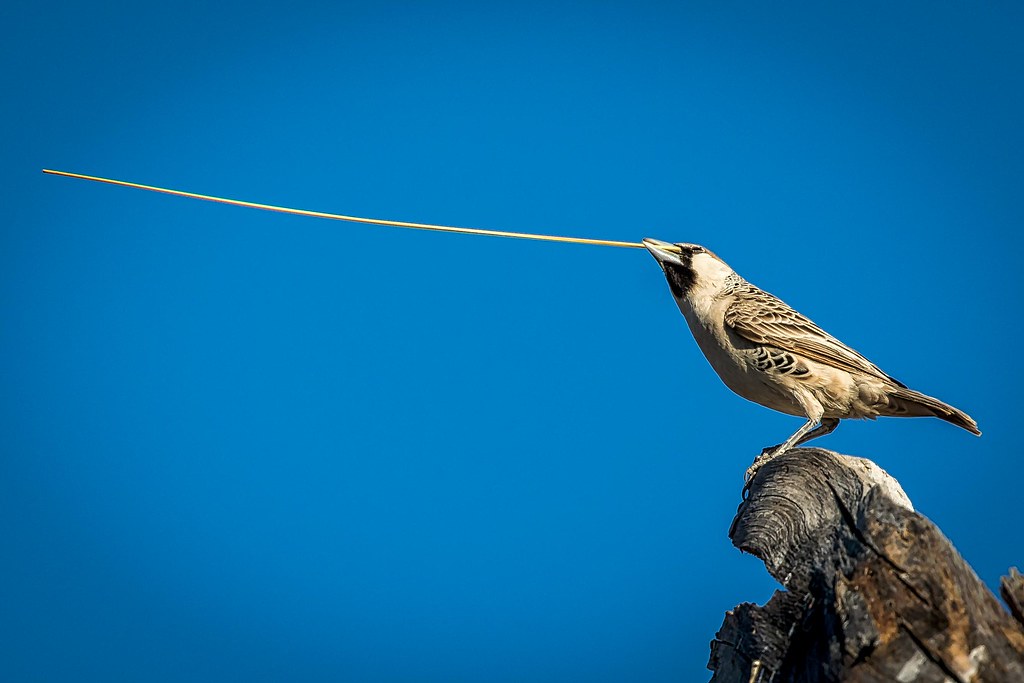
It takes teamwork - it would take forever otherwise.


As for its ingenuity – these birds are master architects. They are not, as you might imagine, one nesting are built over another built over another. They are highly structured with one thing in mind – temperature. The chambers at the center of the nest retain heat and so are warm at night, allowing the sociable weavers to roost without shivering. The 'rooms' towards the outer sides of the nest are used for shade in the day time. They will maintain a cool temperature of 7–8 °C (45–46 °F) inside. Once outside, the heat of the Kalahari ranges from 16–33 °C (61–91 °F). The sociable weaver effectively structures its nest to create an air-conditioning system. Not bad for a bird that isn't even as long as your hand.


Nest are built around a variety of trees but if something like a telephone or electricity pole is large and sturdy enough then this bird is not fussy and will build there. There have been examples of nests built around electricity poles burning down in the dry season. This is unfortunate as many nesting colonies are active for over a century.

Occasionally, when there are heavy rains the nest will become sodden and parts of them will collapse. Here you can see a nest in Namibia, probably decades old, which has collapsed in the middle.


When a nest is seen from below it has a honey-comb appearance and the entrances can be seen. These entrances lead on to a short tunnel of around 250mm (10 in) which must be clambered through to reach the roosting chambers. Often sharp sticks are placed around the entrance holes in an attempt to deter predators. And here's the downside. A nest of this nature may appear something of an idyll for the birds but it attracts attention – often of the unwanted variety.


Before we get to that, however, a note on the generosity of the sociable weaver. When there is space in the nest they are not bothered by other birds making their home their too. The red-headed finch (seen above among weavers) and rosy-faced lovebird use it to breed. The familiar chat and ashy tit will use it to roost – an escape from the sunshine for a short time. There have even been cases of owls, vultures and falcons making the nest a platform for their own. This is a type of commensalism which is a term for an interaction where on species gets benefits but the other species is neither benefited nor harmed.


Then, however, there are the reptiles. Cape cobras and boomslangs will often predate the nest. Once they get in they will eat all of the eggs in all of the chambers. One scientific study placed the depredation as high as 70%. Yet the sociable weaver is a pragmatic breed.
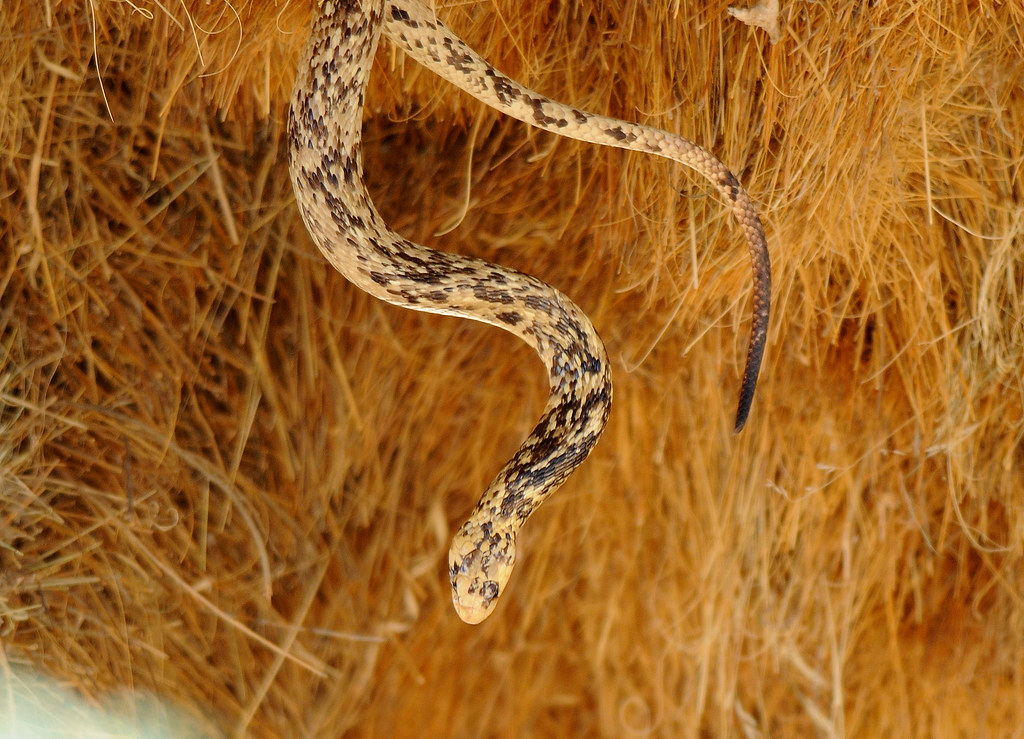
One pair of birds was recorded producing nine broods because of consistent visits by snakes to the nest. In other words, they keep on going until it works.


They do get some help with the predators – but at a price. The pygmy falcon (above) will use the nest of the sociable weaver to bring up its own chicks. It will then hunt around the nest but when prey is scarce is will turn to the chicks of the social weaver. There is a fine balance here – it seems the sociable weaver will tolerate a certain amount of predation by the pygmy falcon but if a pair takes too many of their chicks the social weavers will band up against them.

When it is unhindered by predation, the sociable weaver can produce four broods in a breeding cycle and as one brood gets old enough to fly and hunt for insects they will look after their younger siblings. In fact they will often act as helpers to other unrelated pairs too. As such, instead of breeding within the first year of life, these birds delay breeding until their second year to give the rest of the colony a hand and develop their own hunting and parenting skills.

This truly is an exceedingly sociable weaver and its nest is truly one of nature's spectacles.


_and_Sociable_Weaver_(Philetairus_socius)_(6453054523).jpg)
